1701 to 1750
Steam, Enlightenment and the slave trade: 1701 to 1750
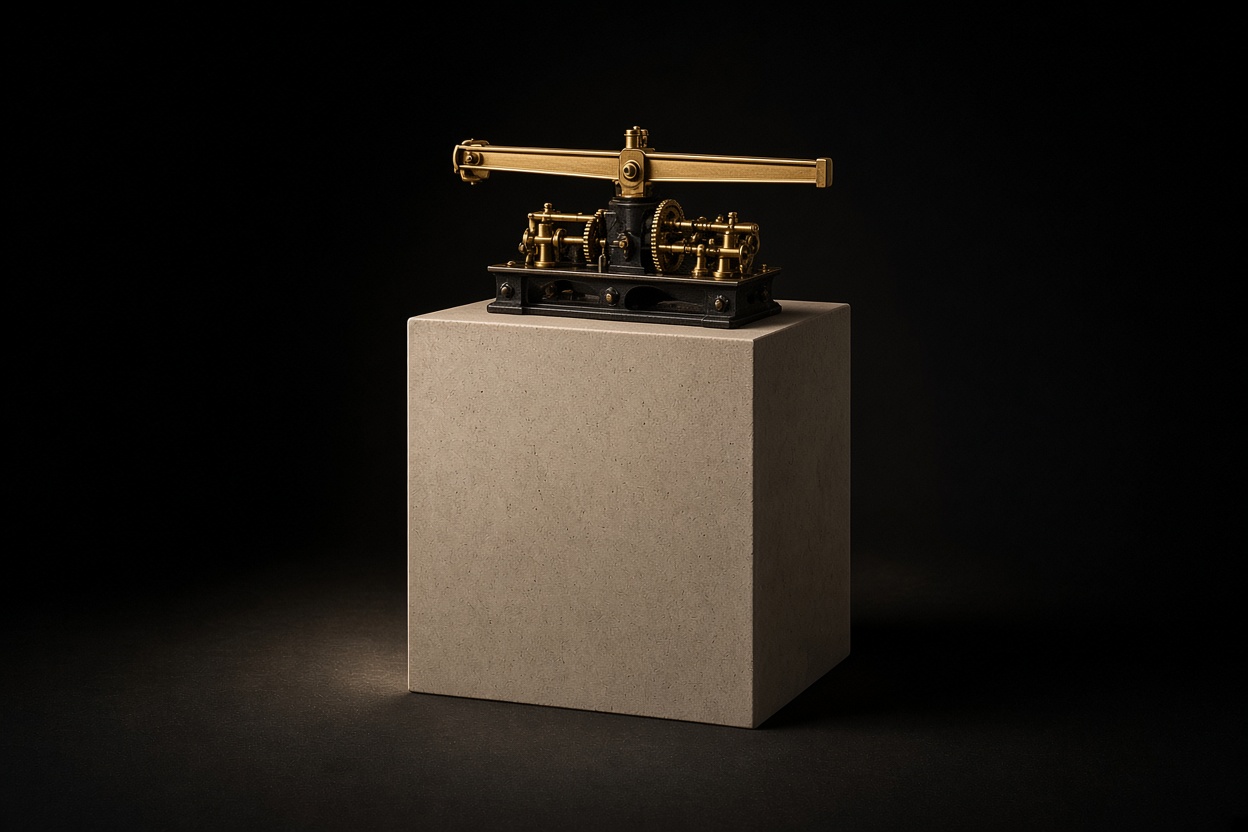
Newcomen's steam engine, smallpox inoculation, Fahrenheit and Celsius thermometers, Linnaeus's naming of life; the rise of Russia and Britain; the Mughal empire breaks up; the Atlantic slave trade at its height. Years with no dated record show what was happening then.
1700s
1701 Tull's seed drill; War of the Spanish Succession Jethro Tull's drill sows seeds in rows; Europe goes to war over Spain's throne; Prussia becomes a kingdom. 1702 The 47 ronin Forty-seven samurai avenge their lord in Edo, a story still famous in Japan. 1703 St Petersburg founded Peter the Great founds his new capital on the Baltic; Newton becomes Royal Society president; Leibniz describes binary numbers. 1704 Newton's Opticks; Battle of Blenheim Newton publishes his work on light and colour; Britain takes Gibraltar. 1705 Halley predicts his comet's return Halley says the comets of 1531, 1607 and 1682 are one object that will return in 1758. 1706 The symbol pi William Jones first uses the Greek letter pi for the circle ratio. 1707 Great Britain formed; Aurangzeb dies; Mount Fuji erupts England and Scotland unite; the last great Mughal emperor dies; Fuji's last eruption. 1708 European hard porcelain Johann Bottger and Tschirnhaus in Saxony learn to make porcelain like China's. 1709 Battle of Poltava; Darby's coke iron; great frost Russia crushes Sweden; Abraham Darby smelts iron with coke; Europe's coldest winter in 500 years. 1710 Statute of Anne: first copyright law Britain gives authors rights over their books. 1711 South Sea Company founded A British company is set up to trade with Spanish America, later a famous bubble. 1712 Newcomen's steam engine Thomas Newcomen's engine pumps water from a mine, the first practical steam engine. 1713 Peace of Utrecht The War of the Spanish Succession ends; Bernoulli's book on probability is published. 1714 Fahrenheit's mercury thermometer; longitude prize Fahrenheit makes an accurate mercury thermometer; Britain offers a prize for finding longitude at sea; George I becomes king. 1715 Halley's eclipse map; Louis XIV dies Halley predicts and maps a solar eclipse over England; Louis XIV dies. 1716 Kangxi Dictionary A Chinese dictionary of over 47,000 characters is completed. 1717 Grand Lodge of England Freemasonry's first grand lodge is founded in London. 1718 Lady Mary Montagu brings smallpox inoculation to Britain She has her son inoculated in Istanbul after seeing the Ottoman practice; New Orleans is founded. 1719 Robinson Crusoe Defoe's novel is published. 1720 South Sea and Mississippi bubbles burst; Plague of Marseille Share prices collapse in London and Paris; plague kills about half of Marseille. 1721 Inoculation tested in Boston During a smallpox outbreak, Zabdiel Boylston inoculates 248 people; far fewer of them die. 1722 Europeans reach Easter Island Jacob Roggeveen lands on Easter Day. 1723 Bach in Leipzig Johann Sebastian Bach becomes music director in Leipzig. 1724 Russian Academy of Sciences founded Peter the Great founds an academy in St Petersburg. 1725 Peter the Great dies; Bering's expedition Vitus Bering is sent to explore the sea between Asia and America. 1726 Gulliver's Travels Swift's satire is published; Voltaire goes to England. 1727 Hales's plant experiments; Newton dies Stephen Hales measures how plants take up water; Newton dies. 1728 Bradley's aberration of starlight James Bradley finds stars shift slightly as Earth moves, proof the Earth orbits the Sun. 1729 Gray finds electricity can be conducted Stephen Gray shows electricity travels along threads. 1730 Reaumur's thermometer Rene de Reaumur makes a temperature scale. 1731 Octant for navigation John Hadley and Thomas Godfrey each make a reflecting octant, ancestor of the sextant. 1732 Poor Richard's Almanack Benjamin Franklin starts his almanac, which included astrological forecasts as was usual. 1733 Kay's flying shuttle John Kay's shuttle speeds up weaving. 1734 Voltaire's Letters on the English Voltaire praises English freedom and Newton. 1735 Linnaeus's Systema Naturae Carl Linnaeus starts the system for naming and sorting living things; French expeditions measure the Earth's shape. 1736 Euler's bridges of Konigsberg Euler solves a puzzle about bridges, founding graph theory; Harrison's first sea clock. 1737 Founding of Gottingen University A university known for science opens. 1738 Bernoulli's principle Daniel Bernoulli explains how fluid speed and pressure are linked. 1739 Nader Shah sacks Delhi The Persian ruler takes the Peacock Throne; the Stono slave rebellion in South Carolina. 1740 War of the Austrian Succession Frederick the Great invades Silesia when Maria Theresa inherits. 1741 Bering reaches Alaska Russian explorers reach Alaska; Bering dies on the return. 1742 Celsius temperature scale Anders Celsius proposes a 100-degree scale (water's points were later flipped). 1743 Benjamin Franklin's American Philosophical Society Franklin founds a learned society in Philadelphia. 1744 First Carnatic War Britain and France fight in India. 1745 Leyden jar stores electricity; Jacobite rising The first capacitor stores electric charge; Bonnie Prince Charlie lands in Scotland. 1746 Battle of Culloden The Jacobites are crushed; Princeton founded. 1747 Lind's scurvy trial James Lind tests treatments on sailors; oranges and lemons cure scurvy. 1748 Montesquieu's Spirit of the Laws; Pompeii dig Montesquieu argues for separation of powers; excavation of Pompeii begins. 1749 Buffon's Natural History Buffon starts a huge work suggesting the Earth is far older than thought.